
Home → Cleaning Help → Coffee stain on carpet
Carpet problem solver
How to remove a coffee stain from carpet safely
Blot first, do not scrub, and identify the carpet before adding cleaner. Coffee can often be removed, but heat, over-wetting and the wrong chemistry can make the mark or fibre damage worse.
DO NOW
Press clean white towels onto the spill to lift as much liquid as possible. Work from the outside towards the centre.
DO NOT
Do not rub, scrub, flood the area or start with hot water.
CHECK FIRST
Find out whether the carpet is wool, synthetic or another fibre and whether wet spot cleaning is allowed.
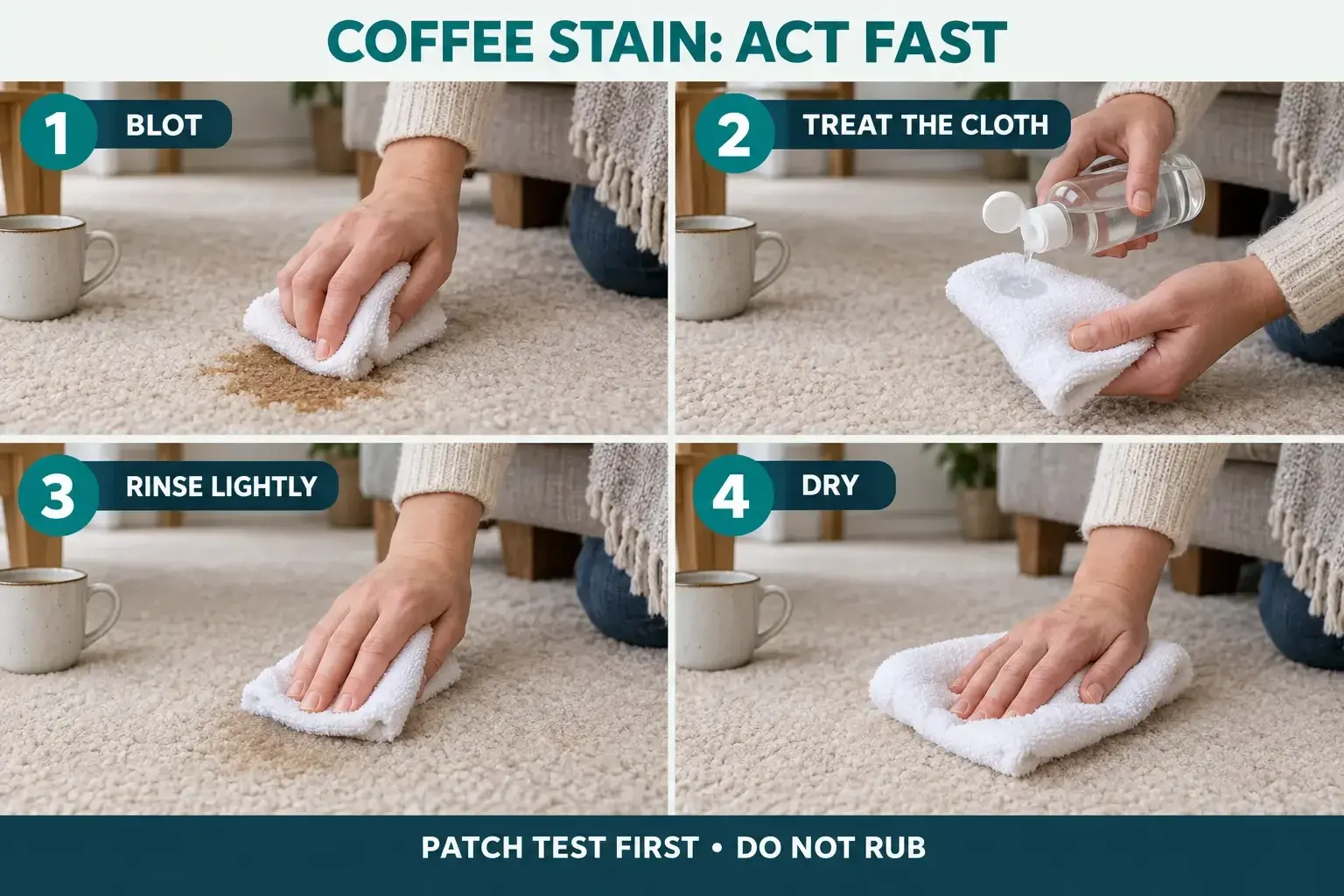
Safe step-by-step method
1. Blot up the coffee
Use a clean white absorbent cloth or white kitchen towel and press firmly. Do not rub. Move from the outer edge towards the centre so the spill does not spread.
2. Check the carpet before adding anything
If you know the manufacturer or fibre, check its care instructions. Wool, viscose, sisal, silk, handmade rugs, unstable dyes and damaged backing need more caution than a common wet-cleanable synthetic carpet.
3. Dilute the remaining spill carefully
For a wet-cleanable carpet, use a small amount of cool water and blot again. Vax advises cold water for fresh coffee and warns that hot water can make coffee tannins harder to remove.
4. Use a fibre-appropriate spot treatment
Choose a carpet spot cleaner that is approved for the fibre and follow the label exactly. For wool, a WoolSafe-approved product is the safer default. Test any product in an inconspicuous area first and use as little moisture as the method requires.
5. Rinse or extract residue if the product requires it
Cleaning residue can attract soil and coffee can wick back to the surface while drying. Follow the product instructions for rinsing or extraction and blot or extract as much moisture as practical.
6. Dry the area fully
Increase ventilation and avoid walking on the treated area until it is dry. If the brown mark returns as the carpet dries, residue may still be lower in the pile or backing.
What not to do
- Do not scrub aggressively.
- Do not flood a small stain with water or cleaner.
- Do not use hot water as the first treatment.
- Do not mix carpet chemicals.
- Do not use an untested acidic or alkaline home remedy on an unknown fibre.
- Do not keep repeating a treatment if colour transfers to the cloth or the fibre changes texture.
Material warnings matter more than the stain recipe
Wool carpet
Use products and methods suitable for wool. WoolSafe publishes approved consumer products and a dedicated stain guide. Avoid treating wool as if it were a generic synthetic carpet.
Synthetic fitted carpet
Many synthetic carpets tolerate wet spot cleaning, but the backing, dye stability and manufacturer instructions still matter. Patch-test first.
Unknown or delicate material
If the fibre is unknown, the rug is handmade, or the colour transfers during testing, stop before adding stronger chemistry and consider professional assessment.
When to stop DIY
- The stain is on wool, viscose, sisal, silk or a valuable rug and you are unsure of the treatment.
- Colour transfers to your cloth or the pile changes texture.
- The coffee contained milk or sugar and the area still smells or feels sticky after drying.
- The mark keeps returning after drying.
- The spill soaked through to the backing or underlay.
- You have already used several products and do not know what residues remain.

In partnership with MyJobQuote
Need professional carpet cleaning?
Compare up to 3 quotes from available local carpet-cleaning professionals.
Ad — affiliate link. We may receive a referral fee; your price does not increase.
Related cleaning help
Pet urine stain and smell on carpet
A different problem because odour can remain below the visible surface.
Free Cleaning Help
Browse the Cleaning Problem Solver and free resources.
Sources checked
- WoolSafe Stain Wizard
- WoolSafe approved consumer carpet-care products
- National Carpet Cleaners Association spot and stain guide
- Vax: removing coffee stains from carpet
Reviewed 14 September 2026. Practical guidance informed by more than 12 years of hands-on cleaning experience. Product labels and the carpet manufacturer’s care instructions take priority where they differ.