
Home → Cleaning Help → Limescale on shower glass
Bathroom problem solver
How to remove limescale from shower glass safely
Start gently. Shower glass can be coated, and the frame, seals or nearby stone may react differently from the glass itself. The safest method depends on what the enclosure is made from and what the manufacturer allows.
DO NOW
Rinse loose soap residue away and wipe the glass with a soft cloth or squeegee.
DO NOT
Do not start with abrasive pads, gritty cleaners or strong household chemicals.
CHECK FIRST
Find out whether the shower glass has an easy-clean or protective coating and check nearby metal, seals and stone.
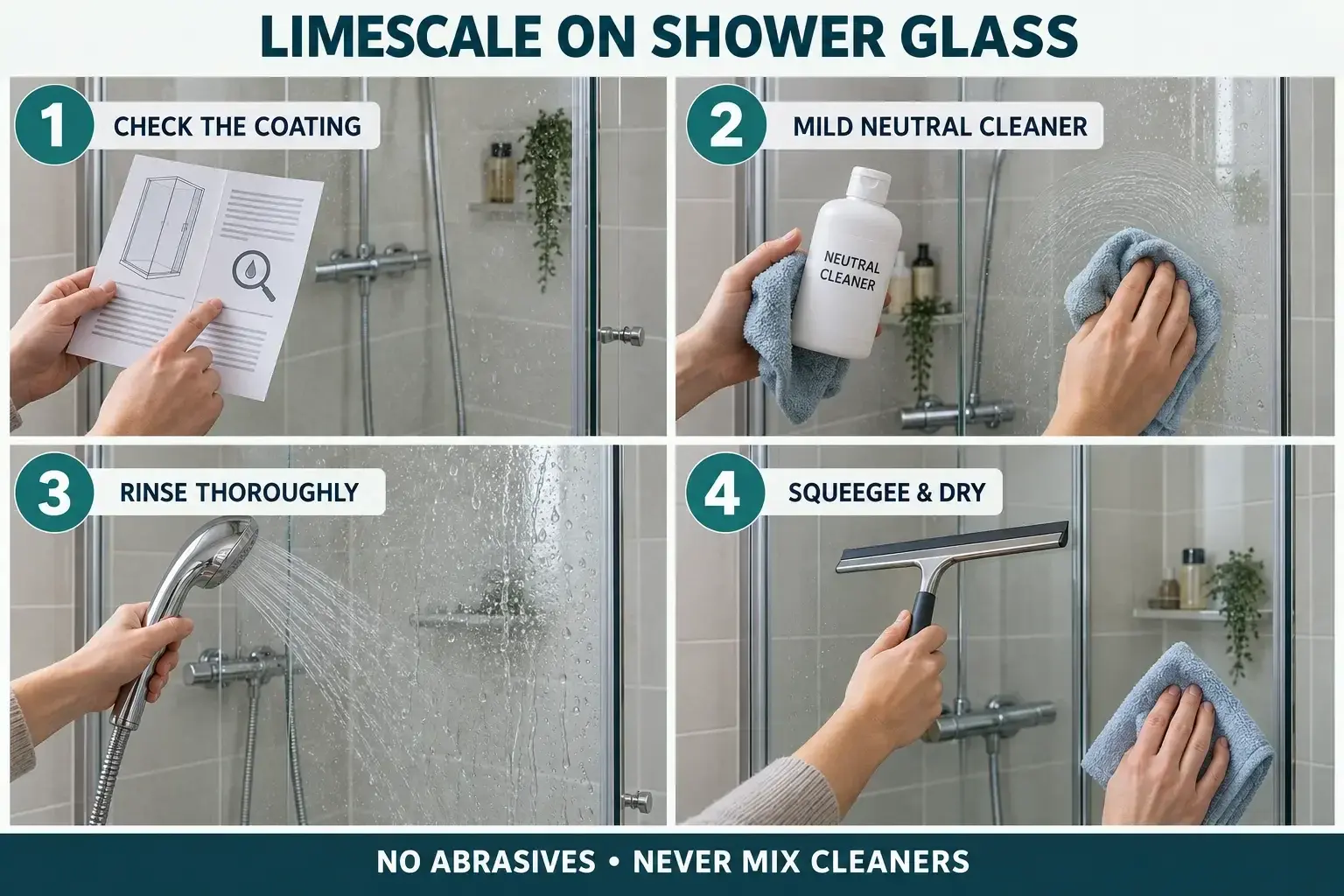
Safe step-by-step method
1. Check whether the glass is coated
Look for the enclosure brand, care guide or easy-clean coating information. Coated glass can have stricter cleaning rules than plain glass. Pilkington, for example, recommends a soft cloth, water and a neutral detergent for its OptiShower coated glass and warns against aggressive products.
2. Start with warm water and a mild neutral cleaner
Use a soft microfibre cloth or non-abrasive sponge. Rinse thoroughly and dry the glass. This is the safest first pass when the coating or finish is unknown.
3. Escalate only if the manufacturer allows it
Some shower manufacturers allow diluted white vinegar for water-marking on suitable uncoated glass. MERLYN, for example, says a 50:50 water-and-vinegar solution may help, provided the residue is removed. Other manufacturers recommend mild proprietary limescale remover used exactly as directed. If the glass has a coating or you cannot identify the finish, stay with the approved neutral-cleaning method instead of guessing.
4. Protect the parts around the glass
Do not leave acidic cleaner sitting on chrome, metal finishes, seals, grout or natural stone. Apply only where the product is permitted and rinse nearby surfaces promptly.
5. Rinse and dry completely
Rinse the glass with clean water and dry with a soft cloth or squeegee. Regular water removal after showering helps prevent mineral deposits building up again.
What not to do
- Do not use scouring pads, steel wool or gritty cleaners.
- Do not use razor blades on coated or unknown glass.
- Do not assume vinegar is safe for every shower screen.
- Do not leave acid-based descaler on chrome, brass finishes, seals or natural stone.
- Do not mix limescale remover with bleach or other household chemicals.
- Do not keep increasing strength if the glass coating or finish is unknown.
The surrounding materials change what is safe
Coated shower glass
Use the enclosure or glass manufacturer’s aftercare instructions. A coating that makes glass easier to clean can still be damaged by aggressive chemistry or unsuitable tools.
Metal frames and finishes
Acids and strong household cleaners can attack some finishes. Keep descaler off vulnerable metal unless its manufacturer specifically permits it.
Stone, grout and sealant
Natural stone can be acid-sensitive and sealants can discolour or degrade. Do not let a glass-cleaning method run onto a different material without checking compatibility.
When to stop DIY
- The glass is coated but you cannot identify the approved cleaning method.
- Cloudiness remains even after careful cleaning and may be surface corrosion or etching rather than removable scale.
- The enclosure has delicate or unlacquered metal finishes.
- Natural stone sits directly beside the glass and could be exposed to acid cleaner.
- Previous abrasive cleaning has scratched or hazed the glass.
- You are dealing with a large commercial or heavily neglected enclosure where the damage risk is high.
Related cleaning help
Free Cleaning Help
Browse the Cleaning Problem Solver and free resources.
Deep cleaning guide
Understand when a wider bathroom or whole-property deep clean makes more sense.
Sources checked
- Ideal Standard shower-enclosure maintenance guidance
- Pilkington OptiShower coated-glass guidance
- MERLYN shower-product cleaning guidance
- Crosswater shower-enclosure care guidance
Reviewed 14 September 2026. Practical guidance informed by more than 12 years of hands-on cleaning experience. The shower manufacturer’s aftercare instructions take priority where they differ.